












Our solutions are tailored to each client’s strategic business drivers, technologies, corporate structure, and culture.
02/23/2026
Q&A: Understanding NEPA reform and what it means for infrastructure agencies
Especially in light of OBBB and the SPEED Act, agencies must prioritize compliance with stronger early-stage planning and documentation.
Q: There has been a lot of talk recently around the National Environmental Policy Act (NEPA) and permitting reform. What changes should infrastructure agencies be paying attention to, especially from a compliance standpoint?
A: Permitting reform conversations are often framed around speed, but the real inflection point is compliance certainty. Recent and proposed reforms are changing not just how fast reviews happen, but how agencies are expected to document decisions, manage coordination, and demonstrate adherence to federal standards.
Two developments are particularly important:
- One Big Beautiful Bill Act (OBBB): Signed in 2025, the OBBB introduced process-based reforms to NEPA, including optional fee-for-service models to expedite environmental reviews. While this can reduce timelines, it also raises expectations around upfront documentation quality, scoping accuracy, and interagency coordination. Paying for speed does not reduce compliance obligations; it compresses them.
- SPEED Act (Standardizing Permitting and Expediting Economic Development Act): The SPEED Act, which passed the House in December 2025 and is under Senate consideration, proposes clearer review timelines and documentation standards, expanded categorical exclusions, and earlier issue identification. From a compliance perspective, this places greater responsibility on project sponsors to get things right at the outset. Agencies that wait to address compliance until after funding is awarded will find fewer opportunities to course-correct.
Taken together with other recent federal decisions, we may be entering the most significant period of permitting reform since the 1990 Clean Air Act Amendments.
Q: Why is it so important to think about compliance early when planning federally funded infrastructure projects?
A: Compliance decisions made at the beginning of a project determine whether funding can move smoothly or become constrained later.
Federal funding comes with a multitude of conditions, reporting obligations, procurement rules, and audit expectations that follow a project from planning through closeout. When compliance is treated as an afterthought, agencies face three primary risks.
- Funding risk: Delays or deficiencies in permitting, documentation, or internal controls can trigger missed obligation deadlines or jeopardize future tranches of funding.
- Delivery risk: Engineering and construction decisions that are not aligned with federal compliance requirements often require rework, redesign, or re-procurement later.
- Oversight risk: Programs that are not designed to meet audit and monitoring standards from Day 1 struggle under federal reviews, Inspector General inquiries, or public scrutiny.
Including financial, engineering, and construction compliance early in the planning process reduces risk to successful capital project delivery and is a key component of responsible governance
Q: What advice would you give infrastructure agencies that are planning major capital deployments right now?
A: Build compliance into your projects from the start so it becomes a source of confidence, not complexity.
The most successful programs are not asking, “Did we follow the rule?”
They are asking, “Have we designed this program so the rule holds under pressure?”
Projects need to be defensible, well‑documented, and financially sound from the start. Agencies that bring in compliance advisors early are better positioned to move faster, respond to change, and protect their funding.
How CohnReznick can help
In this environment of faster timelines and higher scrutiny, we help clients build compliance into the foundation of their infrastructure programs instead of layering it on after funding is being spent, so that they can unlock funding and deliver complex capital programs with confidence.
That includes:
- Designing governance and internal control frameworks that align with federal grant and permitting requirements
- Clarifying roles and ownership across environmental, engineering, procurement, and finance teams
- Establishing documentation standards that anticipate audits, monitoring visits, and evolving federal guidance
- Sequencing projects and funding strategies to reduce exposure to permitting or compliance bottlenecks
Our role is to help agencies move quickly without increasing risk. We focus on what federal reviewers will expect to see, and manage strategically to those risks.
Because we work across funding strategy, financial management, and compliance, we help clients connect decisions that are often made in isolation. That integration is what allows programs to hold up over time.
About the writers
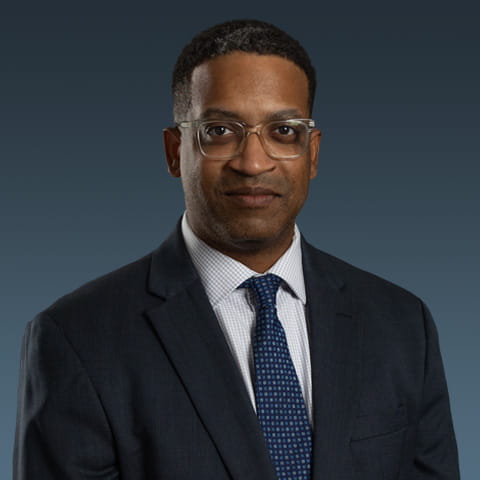
Chandler Milhollin, Senior Manager: Before joining CohnReznick, Chandler spent eight years as an environmental engineer at the EPA, supporting federally funded infrastructure initiatives such as solar energy deployment, industrial emission reduction initiatives, and diesel fleet and equipment upgrades, with NEPA informing compliance strategies. She currently participates in a national work group focused on federal permitting reform, using the resulting insights on how infrastructure programs are reviewed, approved, and scrutinized to inform practical compliance strategies that help clients deploy funding faster while standing up programs that can withstand oversight.
Ron Frazier, Senior Manager: Ron is a licensed attorney and project management professional with more than 20 years of experience advising public agencies and private clients on program compliance, construction oversight, and integrity monitoring. He led the Gateway Program risk assessment and oversight framework development for the New Jersey Office of the State Comptroller, and oversees CohnReznick’s statewide Integrity Oversight Monitoring portfolio for the state of New Jersey, supporting 12 agencies and more than $9 billion in federal funding across CARES, ARPA, and CRF programs. Ron’s work spans federal, state, and local infrastructure initiatives, where he applies deep expertise in risk assessment, internal controls, and federal grant compliance to help clients strengthen governance, prevent fraud, waste, and abuse, and deliver complex capital programs responsibly and transparently.
Close
Contact
Let’s start a conversation about your company’s strategic goals and vision for the future.
Please fill all required fields*
Please verify your information and check to see if all require fields have been filled in.
Related services
Receive CohnReznick insights and event invitations on topics relevant to your business and role.
This has been prepared for information purposes and general guidance only and does not constitute legal or professional advice. You should not act upon the information contained in this publication without obtaining specific professional advice. No representation or warranty (express or implied) is made as to the accuracy or completeness of the information contained in this publication, and CohnReznick, its partners, employees and agents accept no liability, and disclaim all responsibility, for the consequences of you or anyone else acting, or refraining to act, in reliance on the information contained in this publication or for any decision based on it.